
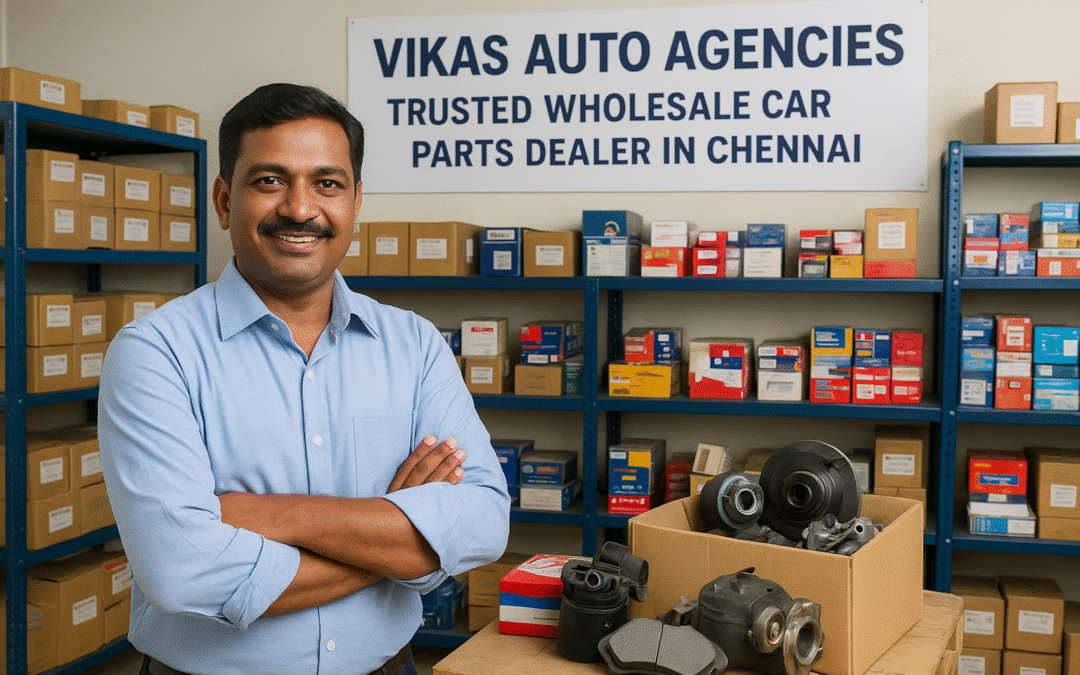
When I started Vikas Auto Agencies a little over a decade ago, I had one simple goal: make doing business with a car-parts wholesaler as painless and predictable as buying a cup of tea. What that meant in practice changed a lot over time. We began as a tiny, rented shop with stacks of old catalogs and a handful of contacts. Today we’re a preferred supplier for repair shops, independent mechanics, fleet owners, and small car-parts retailers across Chennai and beyond.
This is the story of how we grew — not overnight, but through steady, deliberate choices that built trust. I’ll walk you through the principles we followed, the systems we put in place, the mistakes we learned from, and the services we now offer that make Vikas Auto Agencies the reliable partner our customers expect.
Contents
- 0.1 1. The Four Pillars That Guided Us from Day One
- 0.2 2. Starting Local — Building Relationships, Not Just Orders
- 0.3 3. Supplier Network — Choosing Partners Carefully
- 0.4 4. Inventory Management — From Hunches to Data
- 0.5 5. Quality Control — Because Reputation Is Everything
- 0.6 6. Customer Service — The Human Advantage
- 0.7 7. Competitive, Transparent Pricing
- 0.8 8. Logistics and Delivery — Delivering More Than Parts
- 0.9 9. Technology — Practical Tools, Not Vanity Projects
- 0.10 10. Training & Knowledge Sharing — Empowering Mechanics
- 0.11 11. Building Trust Through Guarantees and Policies
- 0.12 12. Community Involvement — Becoming Part of Chennai’s Automotive Ecosystem
- 0.13 13. Handling Tough Moments — Mistakes, Learning, and Recovery
- 0.14 14. Scaling Responsibly — The Road Ahead
- 0.15 15. What Makes Vikas Auto Agencies Different — A Quick Summary
- 0.16 16. Advice for Other Parts Dealers
- 1 FAQs (Frequently Asked Questions)
- 2 Call-to-Action
1. The Four Pillars That Guided Us from Day One
From the earliest days I insisted we run the business on four non-negotiables:
- Quality first — sell parts that work and stand behind them.
- Availability — keep the parts mechanics need in stock.
- Speed of service — fast order processing and reliable delivery.
- Clear, fair pricing — transparent costs, no hidden charges.
These aren’t marketing copy. They were decisions I had to live with every day. If a supplier sent us a questionable batch, we refused it. If a mechanic called at 7:00 a.m. panicked, we answered. If a customer discovered a genuine defect, we took responsibility. Consistency on those points is what builds trust.
2. Starting Local — Building Relationships, Not Just Orders
We started small and intensely local. Chennai has dense neighborhoods and a tight network of mechanics and garages. Rather than trying to sell everywhere at once, we focused on a few neighborhoods and became the go-to partner there.
What that meant in practice:
- Visiting workshops personally to understand their most common breakdowns and which parts they ran out of most.
- Helping new mechanics set up their first parts order at cost-friendly break-even pricing to build goodwill.
- Listening — not pitching — during every visit. We learned about seasonality, the small idiosyncratic parts that always ran out, and which brands mechanics trusted for different jobs.
Those relationships mattered: they converted first-time customers into repeat customers and generated word-of-mouth referrals that stayed local but strong.
3. Supplier Network — Choosing Partners Carefully
You can’t promise quality if your suppliers aren’t reliable. So we built a supplier network with three rules:
- Verified credibility: We only worked with suppliers who could show invoices, manufacturing information, or references from known distributors.
- Sample testing: For key components (brake pads, filters, bearings), we ordered samples and tested them ourselves or with trusted mechanics before placing larger orders.
- Diversification: For high-demand items, we kept at least two sources to avoid disruptions if one supplier had a problem.
This network cost us time and early margins, but avoiding stockouts and quality complaints paid back many times over. When substitutes were necessary, we communicated proactively with our customers about the change and why it wouldn’t affect performance.
4. Inventory Management — From Hunches to Data
In the early days, our inventory decisions were guesswork: what felt popular, what we remembered being requested. That led to both stockouts and dead inventory.
We fixed that by investing in three inventory practices:
- Basic inventory system: Not a fancy ERP, but a simple digital ledger that tracked SKUs, incoming shipments, and frequency of sale.
- ABC analysis: We classified parts by value and velocity. “A” items are fast-moving essentials (filters, brake pads), “B” are steady sellers, and “C” are slow movers or specialty parts.
- Safety stock: For A-items we maintained a buffer stock to handle small demand spikes and minor supply delays.
This mix of discipline and practical tech reduced stockouts dramatically and improved cash flow because we stopped overstocking low-velocity items.
5. Quality Control — Because Reputation Is Everything
We learned early that a single bad batch can tarnish a reputation. Our quality-control approach included:
- Incoming inspection: Every pallet either got a visual check or sample tested before it hit the shelf.
- Mechanic partnerships for testing: We partnered with trusted local workshops to validate parts in real-world conditions rather than just relying on paperwork.
- Clear returns policy: If a part was faulty, we replaced it promptly and covered shipping when the mistake was ours.
This translated into fewer disputes, faster resolutions, and a reputation that we “take accountability.”
6. Customer Service — The Human Advantage
Automated chatbots and self-serve portals are excellent for scale, but in our market, the human touch matters. Mechanics often need to describe symptoms, not part numbers. Our customer service is built on three capabilities:
- Part identification by symptom: Our team knows how to ask the right follow-up questions and map symptoms to likely parts.
- Dedicated account handlers: For larger garages and small retailers we assign an account person so orders, credit, and returns are managed smoothly.
- After-sales support: We follow up on larger orders to ensure parts fit and function; if an issue emerges, we act quickly.
Human-centered service turned many one-time buyers into loyal clients who trusted us with bigger, recurring orders.
7. Competitive, Transparent Pricing
We don’t promise to be the cheapest — we promise to be fair. How we price:
- Market-based pricing: We monitor market wholesale rates and keep our margins realistic.
- Volume discounts: Regular customers and bulk buyers get clear tiered discounts; no need to haggle.
- Transparent invoices: Every invoice breaks down parts, taxes, and delivery so clients know what they’re paying for.
This transparency matters to shop owners working on razor-thin margins. They trust us not just to supply parts but to help them maintain profitability.
8. Logistics and Delivery — Delivering More Than Parts
Chennai is large and traffic is challenging. On-time delivery is more than convenience — it’s business continuity for our customers. We invested in:
- Efficient routing: Orders are batched by geography to minimize delivery time.
- Multiple delivery options: Same-day for nearby workshops, next-day for farther destinations, and scheduled deliveries for regular clients.
- Reliable packaging: Parts packed to avoid damage and labeled clearly so mechanics can find what they need quickly.
We learned that a late delivery can be worse than a slightly higher price — because it interrupts your customer’s day and may cost them a job.
9. Technology — Practical Tools, Not Vanity Projects
We didn’t build a complex e-commerce platform until we had the processes ironed out. Our tech investments were pragmatic:
- Order tracking: A simple portal where registered buyers see order status.
- Digital catalogs with images and fitment notes: Mechanics could cross-check part fitment by model/year.
- SMS/WhatsApp updates: Short, reliable messages for order confirmations and delivery updates — what busy mechanics actually use.
We prioritized features that saved time and reduced errors rather than flashy additions.
10. Training & Knowledge Sharing — Empowering Mechanics
A big part of being trusted is being seen as knowledgeable. We ran regular short workshops and knowledge-sharing sessions:
- New-parts training: When a new filter or upgraded component comes in, we brief mechanics on advantages and fitment tips.
- Troubleshooting clinics: On Saturdays, mechanics could bring examples and get hands-on troubleshooting help.
- Warranty and fitment best practices: We educate on installation best practices to reduce early failures.
This made our relationship with garages collaborative — we weren’t just selling; we were raising the technical capability of local workshops.
11. Building Trust Through Guarantees and Policies
Trust is fragile — so we reinforced it with policies:
- Clear warranty terms: For eligible parts we offer warranty coverage and make the claim process straightforward.
- Return-friendly window: We accept returns for unopened items within a reasonable time, and we swiftly process legitimate claims.
- Honest communication: When stock was delayed or a substitution was necessary, we called the customer — early communication prevented many complaints.
These policies showed customers that we stood behind what we sold.
12. Community Involvement — Becoming Part of Chennai’s Automotive Ecosystem
We didn’t grow in a vacuum. Being an active community member matters for a local business:
- Sponsored local mechanic association meetings and small tournaments.
- Supported vocational training centers for young mechanics.
- Participated in city-level safety campaigns (brake checks, free filter checks at petrol pumps).
This community involvement built brand recognition and goodwill that paid dividends.
13. Handling Tough Moments — Mistakes, Learning, and Recovery
No story is without bumps. We had supplier issues, a mis-shipped container once, and a software glitch that messed up invoices for a week. What mattered was how we handled these moments:
- We owned mistakes publicly, corrected them fast, compensated when justified, and changed the process to prevent repeats.
- We kept customers informed during disruptions; transparency prevented escalation.
- We used incidents as root-cause learning sessions internally and with our suppliers.
Repairing trust after a problem builds a deeper level of trust than never having problems — because it demonstrates accountability.
14. Scaling Responsibly — The Road Ahead
Today our warehouse is bigger, our team has specialists (procurement, quality, delivery), and our client base has grown beyond Chennai to neighboring districts. But scaling didn’t mean abandoning the things that built trust:
- We kept the same customer service ethos.
- We expanded inventory rationally, informed by sales data.
- We kept a local feel by assigning regional account managers.
Growth for us is about serving more customers while keeping the personal, dependable service that created our reputation.
15. What Makes Vikas Auto Agencies Different — A Quick Summary
- Deep local knowledge: We know Chennai’s garages and their needs.
- Verified quality: Supplier verification and real-world testing.
- Reliable inventory: Practical systems to reduce stockouts.
- Fast, accountable delivery: Because time equals money for mechanics.
- Transparent pricing and fair policies: Builds long-term partnerships.
- Human support: Real conversations, part identification, and post-sale follow-up.
16. Advice for Other Parts Dealers
If you run a small wholesaler and want to build trust:
- Focus on relationships, not just transactions.
- Build a small but reliable supplier base and test samples.
- Use simple inventory discipline — ABC analysis goes a long way.
- Communicate early and often with customers, especially when things go wrong.
- Offer guarantees you can honor — customers notice when you stand behind your promises.
If you start there, the rest follows.
FAQs (Frequently Asked Questions)
Q1: Where is Vikas Auto Agencies located in Chennai?
A: We are centrally located (please check our contact page or call us for the exact address and directions). We serve across Chennai with same-day or next-day deliveries depending on the area.
Q2: Do you supply original equipment manufacturer (OEM) parts or aftermarket parts?
A: We supply both. For many older and common models we stock trusted aftermarket brands; for customers who require OEM-grade parts we can source and supply them—often via our verified supplier partners.
Q3: What is your warranty policy on parts?
A: Warranty varies by part and manufacturer. We clearly state warranty coverage at the time of sale. For any eligible warranty claim, we facilitate replacement or credit quickly after verification.
Q4: Do you accept returns?
A: Yes — unopened items can be returned within the specified return window. Used parts and items installed on vehicles are evaluated on a case-by-case basis.
Q5: Can I place bulk orders and get discounts?
A: Absolutely. We offer tiered discounts for bulk purchases and regular supply contracts. Contact our sales team to discuss terms and delivery schedules.
Q6: How do I know a part will fit my vehicle?
A: Provide your vehicle’s make, model, year, and engine code if available. Our team cross-checks fitment notes in our catalog and can advise on compatible alternatives.
Q7: Do you deliver outside Chennai?
A: Yes — we deliver to nearby districts and can arrange courier shipments across India for certain parts. Delivery options and timelines depend on location and part size.
Q8: How do you handle quality complaints?
A: We prioritize fast resolution: replacement, credit, or refund where appropriate. We investigate root causes with our suppliers to prevent recurrence.
Q9: Do you offer technical support for mechanics?
A: Yes. We run periodic technical sessions, offer installation tips, and provide quick-fit guidance on common parts.
Q10: How can I become a regular/commercial customer?
A: Contact our sales desk to register. We’ll assign an account manager, agree on credit or payment terms, and set up scheduled deliveries if desired.
Call-to-Action
If you’re a garage owner, a fleet manager, or retail parts dealer in Chennai looking for a dependable partner, call our sales team or drop by the warehouse. Let us show you how predictable supply and honest service can change the way you run your business.
CONTACT US : contact us
Address : address
I NEED A XUV500 SPARE PRATS ON CHEAP PRICE
Avalaible sir pls contact at this number regarding your requirement
9952939650